%20(2).png "Robert M. Beren Bridge Builders Fellowship (1920 x 759 px) (2)")

%20(2).png?width=1920&height=759&name=Robert%20M.%20Beren%20Bridge%20Builders%20Fellowship%20(1920%20x%20759%20px)%20(2).png "Robert M. Beren Bridge Builders Fellowship (1920 x 759 px) (2)")
$10,000 Scholarships for HBCU Students


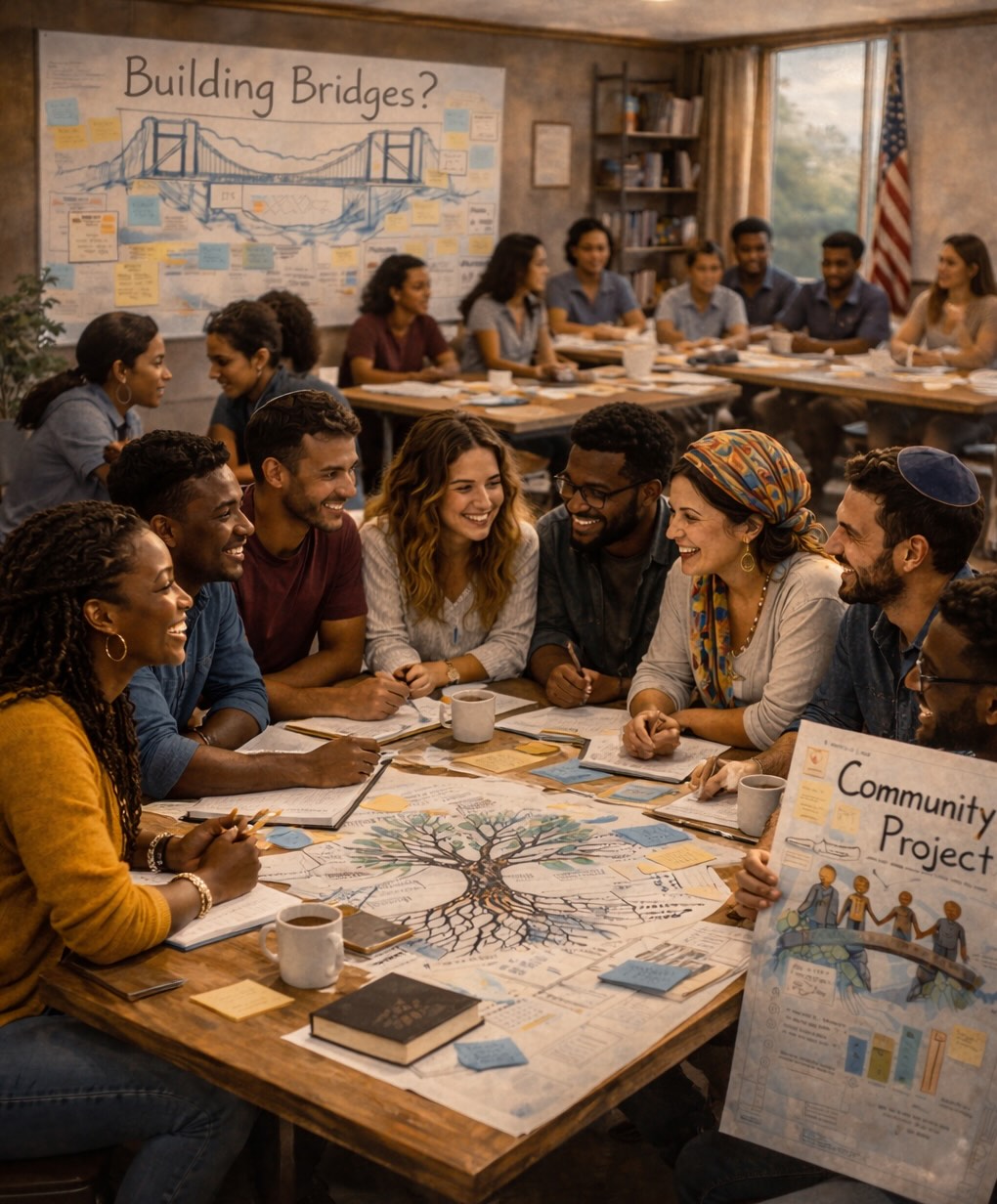
Applications are now open for Robert M. Beren Bridge Builders Fellowship—a joint initiative between the Combat Antisemitism Movement (CAM) and the African American Mayors Association (AAMA) and the National Black Empowerment Council (NBEC). This program invites students attending or entering Historically Black Colleges and Universities (HBCUs) to join a new generation of leaders dedicated to reinforcing the longstanding alliance between Jewish and African American communities.
Through scholarships, leadership development, and collaborative learning, the program equips fellows with the knowledge, networks, and resources to advance dialogue, confront antisemitism and racism, and build lasting bridges between communities. It draws inspiration from the legacy of leaders such as Rabbi Abraham Joshua Heschel and Martin Luther King Jr.
Fellowship Experience
The Robert M. Beren Bridge Builders Fellowship is a year long leadership program designed to bring together emerging leaders from Historically Black Colleges and Universities and Jewish student leaders to learn, engage, and build lasting partnerships.
Throughout the fellowship, participants will take part in a series of interactive learning sessions, leadership workshops, and discussions exploring the history of Black Jewish cooperation, the challenges facing both communities today, and the opportunities to rebuild trust and partnership for the future. Sessions will feature scholars, community leaders, elected officials, and activists who will share insights and guide fellows in developing their leadership skills.
A key component of the program is the collaboration between Bridge Builders Fellows and Jewish students affiliated with the Tikvah Fund. Fellows will form teams and participate in joint dialogue sessions, allowing participants to exchange perspectives, deepen understanding, and build meaningful relationships across communities.
Throughout the year, fellows will work together to design and develop practical initiatives aimed at strengthening Black Jewish cooperation in their communities. At the end of the fellowship, teams will present their projects to a panel of judges. Selected projects will receive up to $10,000 in funding and mentorship support from the Combat Antisemitism Movement to help bring these initiatives to life.
How the Contest Works
Students are invited to participate in a national contest as the first step to becoming a Robert M. Beren Bridge Builders Fellow. Applicants are encouraged to submit an original essay, video, or work of art exploring the history of cooperation between Jewish and African American communities in the United States and sharing their ideas for how that partnership can be strengthened for the future. Submissions should reflect creativity, leadership, and a commitment to building stronger relationships between communities.
Following a review process conducted by a panel of distinguished judges and interviews with selected candidates, twenty students will be chosen as Robert M. Beren Bridge Builders Fellows. Each fellow will receive a $10,000 scholarship paid directly to their enrolled Historically Black College or University and will join a year long leadership program focused on dialogue, learning, and developing projects that strengthen Black Jewish partnership across the United States.
The contest will open for submissions on March 15th, 2026 and will close on June 15th, 2026.
C O N T E S T P R O M P T S
C O N T E S T P R O M P T S
( S E L E C T O N E )
-2.png?width=200&height=150&name=Untitled%20design%20(9)-2.png "Untitled design (9)-2")
P R O M P T 1:
Shared History, Shared Future
Explore a moment in history when Jewish and African American communities stood together to advance justice or civil rights. Why does this partnership matter today, and how can your generation strengthen this alliance for the future?
Format: Essay
Length: Up to 1,000 words
-2.png "Untitled design (8)-2")
P R O M P T 2:
Building Bridges in Your Community
Identify a challenge or misunderstanding that exists today between communities. What practical idea, project, or initiative would you create to bring people together, build trust, and promote cooperation?
Format: Essay
Length: Up to 1,000 words
-4.png "Untitled design (7)-4")
P R O M P T 3:
Leadership Against Hate
Antisemitism and racism continue to affect communities across the United States. What role should young leaders play in confronting prejudice and promoting unity? Share your vision for how students and communities can work together to stand against hate.
Format: Essay
Length: Up to 1,000 words
Robert M. Beren
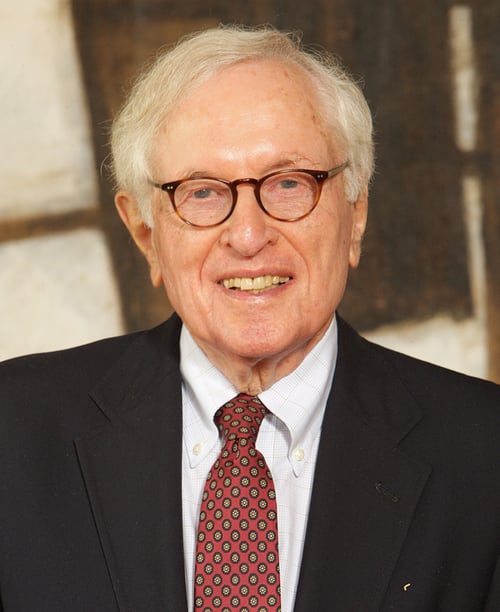
The fellowship also honors the late Robert M. Beren and his enduring legacy, who, through his foundation, helped launch and continues to support the Combat Antisemitism Movement to confront rising discrimination against Jews around the world. Through their leadership and philanthropy, the Beren family has carried forward their father’s commitment to defending the rights and safety of Jewish communities and opposing discrimination against others, including within the African American community.
During the 1960s, Robert M. Beren played a pivotal role in desegregating the Wichita, Kansas, public school system while serving as president of the school board. He dedicated months to developing and advocating for a comprehensive desegregation plan that earned both federal and local approval. Through integrity, transparency, and persistence, he built trust among civic leaders, engaged the broader community despite resistance, and guided the school board to meet its legal and ethical responsibilities.
ENTRY GUIDELINES
S U B M I T Y O U R E N T R Y
Eligibility:
Only open to students attending or entering Historically Black Colleges and Universities (HBCUs)
Deadline:
June 15, 2026
How to Enter:
All entries must be submitted digitally via the contest’s online entry form, below. Find below some resources to inspire you and help you think about ideas.
Rules:
1. Eligibility is limited to students attending or entering Historically Black Colleges and Universities (HBCUs).
2. Entries may be submitted in the format specified for the selected prompt. Submission format, length, and requirements vary by prompt. Please refer to each prompt for detailed guidance and structure.
3. Each submission must demonstrate detailed and meaningful research on the historical relationship between Jewish and Black Americans.
4. Sources must be listed for any submission that includes factual or historical information. A formal citation style is not required; a brief list of credible sources is sufficient.
5. All essay submissions must reflect original student work. CAM will use AI-detection tools as part of the review process.
6. By entering the contest, participants grant the contest organizers the right to reproduce or display submissions for educational and promotional purposes, with appropriate credit.
E N T E R H E R E
Guide to Submitting a Winning Entry for the Bridge Builders Fellowship
G U I D E T O C R E A T I N G
A W I N N I N G E N T R Y
This contest invites students to explore the shared history and relationship between Jewish and Black Americans through thoughtful research, reflection, and original work. Strong submissions demonstrate curiosity, depth, and meaningful engagement with the historical partnership and contributions of both communities.
Find below some resources to inspire you and help you think about ideas.
BEGIN WITH RESEARCH
Successful entries should start with thoughtful research on the history and relationship between Jewish and Black Americans. Use credible sources, historical examples, and key moments of cooperation between the two communities to guide your topic and strengthen your work.
CHOOSE A CLEAR FOCUS
Select one individual, historical moment, idea, or theme and explore it in depth. Focused submissions are clearer, more compelling, and easier for judges to evaluate than projects that try to cover too much.
GO BEYOND SUMMARY
Winning entries do more than repeat facts. They explain historical context, analyze significance, and clearly show why the subject still matters today. Judges are looking for insight, originality, and thoughtful interpretation.
USE RESEARCH PURPOSEFULLY
Support your work with credible historical sources and evidence.
BE ORGANIZED AND CLEAR
Strong submissions have a clear structure, logical flow, and a conclusion that reinforces the main idea. Make sure your work directly responds to the prompt you selected and follows all format and length requirements.
REFLECT ON YOUR LEARNING
Where required, use the reflection paragraph to explain what you learned through your research process and how it shaped your understanding. Judges value thoughtful reflection and evidence of learning growth.
MAINTAIN ORIGINALITY AND INTEGRITY
All submissions must reflect your own ideas and voice. Plagiarism and the use of Artificial Intelligence tools to generate content are not permitted.
H E L P F U L T I P S F O R
E A C H P R O M P T
Tips for Prompt #1
Profile a Jewish person who made an important positive contribution to America. Explore how their Jewish identity (and if relevant, immigrant identity) shaped their work.
1. If you don’t immediately have an individual in mind, the “Jewish Heritage of America” curriculum includes numerous examples of Jews who shaped American society and culture. For example, see the remarkable story of Emma Lazarus (pg. 15) and her iconic poem redefining the Statue of Liberty as a welcoming beacon for immigrants seeking a better life. Indeed, many prominent American Jews were themselves immigrants or the children of immigrants, so perhaps consider how the immigrant experience might have shaped their journey.
2. The curriculum’s third section (beginning on page 41) profiles many outstanding American Jews from politics, to business, to academia, to arts and culture. Explore how Jonas Salk discovered a transformative vaccine for polio; how Leonard Bernstein shaped modern American music; or how Sergeant Christopher Celiz earned the Medal of Honor.
3. The person you profile does not need to be a celebrity. Look up Ralph Baer, who fled the Nazis and invented the video-game; human rights pioneer Robert Bernstein; or philanthropist Rebecca Gratz.
4. Whomever you choose to profile, don’t just present facts but tell a story and bring the individual to life. Consider the defining moments and values that drove them, as well as how they made an impact that benefited American society as a whole. Maybe begin with a dramatic moment in their life story, or explore how your own life has been impacted by the individual’s work and legacy.
Tips for Prompt #2
Spotlight an inspiring partnership between African Americans and Jewish Americans that positively impacted society. Bring to life the dynamic collaboration and draw lessons from it.
1. The “Jewish Heritage of America” curriculum on page 41 spotlights one of the most famous examples of Black-Jewish partnership: the civil rights efforts championed by Martin Luther King Jr. with Rabbi Abraham Joshua Heschel at his side. Page 47 also mentions philanthropist Julius Rosenwald, who partnered with Booker T. Washington to build a network of over 5,000 schools in African American communities.
2. Blacks and Jews have a deep history of collaborating on civil rights efforts. For example, learn about the founders of the NAACP. Or look up the story of civil rights activists James Chaney, Andrew Goodman, and Michael Schwerner. Or research the story of how Bayard Rustin (organizer of the 1963 March on Washington) stood up for Jews in 1967.
3. Music is another prominent area where African Americans and Jewish Americans have done pioneering work together. Jazz music, for example, is filled with stories of creative collaboration. Look up why jazz icon Louis Armstrong wore a Jewish star necklace.
4. In some cases, prominent African Americans have themselves been Jewish, like legendary singer Sammy Davis, Jr. or Rashida Jones. The memoir “The Color of Water” by James McBride portrays one family example. Research “African Americans Jews” to explore this theme.
5. Whatever partnership you choose to spotlight, bring it to life. Explore what challenges and opportunities brought the individuals together, as well as how they developed a dynamic partnership. Don’t forget to analyze what lasting lessons and inspiration we can take from the example.
Tips for Prompt #3
Create an artwork celebrating Jewish American Heritage. Options include composing a song or poem, designing a painting or mock-up for a street mural, and producing a video clip.
1. Works of art reflect the spirit and soul of the creator, so with this prompt definitely unleash your creativity and be open to thinking outside the box. That being said, outstanding entries will need to resonate with popular audiences. The goal is to create a work of art that will educate and inspire others.
2. You might consider focusing on a particularly dramatic incident from the American Jewish experience. Browse the “Jewish Heritage of America” curriculum for inspiration. Perhaps select a scene from early American history or a modern moment. Whatever you choose, bring the scene to life. Try to capture its energy and main themes.
3. Inspiration might also come from looking at the suggestions from the other three prompts. You could choose to focus on an outstanding individual, a Black-Jewish partnership, or the struggle to stop antisemitic bigotry.
4. If you write a song, upload both the music and lyrics – ideally with a recording. You can do this as a sound file or make a music video. If you make a painting, upload a digital photo of it. If you have an idea for a street mural, you can actually make one in your neighborhood (which would be amazing) but it is likely much easier simply to create a mock-up design for what the mural would look like. If you can, describe where specifically you would like to place the mural. If you make a video clip, be creative and concise – remember the time limit is two minutes.
Tips for Prompt #4
Propose concrete ways Americans can counter rising antisemitism and promote appreciation for Jewish American heritage. Analyze the challenge and present an innovative plan.
1. Antisemitism is an age-old form of bigotry and intolerance that has unfortunately surged in American society in recent years. This prompt asks you to consider how Americans of all backgrounds can take conscientious action in response. Your entry should identify a particular aspect of contemporary antisemitism and explain how your proposed response could make a positive impact.
2. The “Jewish Heritage of America” curriculum includes several sections on antisemitism. Page 11 tells the story of how President George Washington addressed it. Part 2, beginning on page 22, explores the legacy of the Holocaust. Part 4, beginning on page 60, examines the recent surge in antisemitism, including at American schools targeting Jewish students. See page 67 for examples of Americans, both Jewish and non-Jewish, tackling the problem. Examples like Tiffany Haddish, Anila Ali, and Richie Torres might help inspire your entry.
3. Another source of inspiration may be the Civil Rights Movement and the Soviet Jewry Movement, both of which are explored in the curriculum (see pages 33 and 41). What lessons might be drawn from these successful movements, where Jews and non-Jews mobilized together to overcome bigotry? Look also at the example of Holocaust Survivor and Nobel Peace Laureate Elie Wiesel, profiled on page 50, and how he worked to raise consciousness about antisemitism.
4. Consider how antisemitism doesn’t only impact Jews but is often a symptom of larger problems in society. Related, consider how tackling antisemitism is not just a responsibility for Jews but for Americans of all backgrounds. Think about the larger issues at stake, and also the positive impact for American society of standing up to antisemitism while celebrating Jewish American heritage.
5. An outstanding entry won’t simply describe the problem, it will also offer potential solutions. It will not simply offer generalities or abstract denunciations of antisemitism, but also provide creative ideas for taking action. Outside-the-box thinking and a can-do attitude are encouraged.
Resources
20 Black Jews You Should Know. Read Here.
Amar'e Stoudemire - From the NBA to Judaism. Listen Here.
Who Was Activist and Rabbi Joachim Prinz? Watch Here.
Why Did a Jewish Businessman Fund Segregated Black Schools? Watch Here.
The Legacy of Chaney, Goodman, and Schwerner. Read Here.
Jewish Voices from the Selma-to-Montgomery March. Read Here.
Beyond Swastika and Jim Crow: Jewish Scholars at Black Colleges. Read Here.
Freedom Rider: Our allies were American Jews. Watch Here.